The Price Tag Is Not the Whole Value Story
Understand casino hospitality value beyond the price tag by checking what an offer includes, how its terms work and whether it fits your visit.
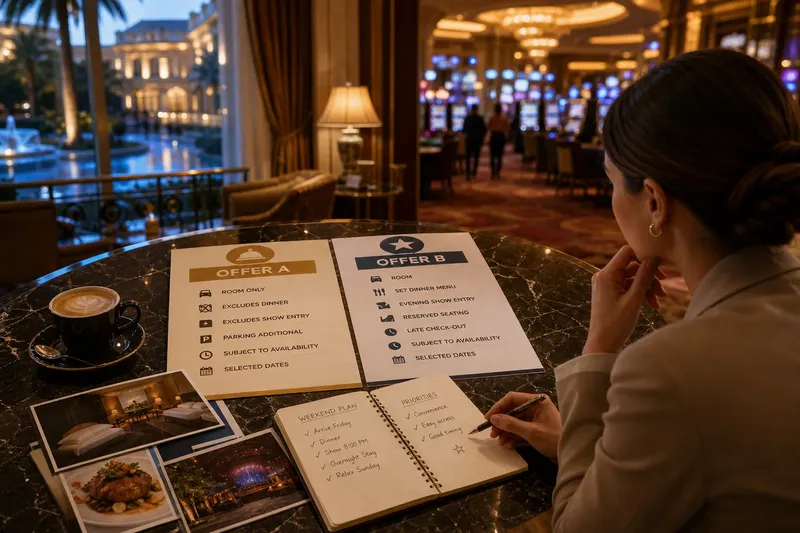
The most common mistake in judging a casino hospitality offer is to compare headline prices before checking what each one permits. A guest can choose a lower room rate and then discover that the booking does not cover the event they planned to attend. The price is clear; the exchange may not be.
For casino hospitality value, the useful question is not simply what an offer costs, but what the guest can actually do with it. Access rules, booking conditions and the sequence of the visit can matter more than a polished description. A price tag tells you the charge, not whether the arrangement fits your plans.
What does the price tag leave out?
A price applies to a defined offer. The definition may be plain, or it may be scattered across a booking page, menu and set of terms. Before comparing amounts, establish what is included and what remains separate.
Check whether a room booking includes breakfast, parking or access to a scheduled event. For a dining offer, look for the covered dishes, drink terms, service charges and booking requirements. Confirm eligible dates and whether a guest must reserve a particular time or use a specific entrance.
These details are not minor footnotes if they affect the visit. A room with breakfast and a room without it are different arrangements, even if their headline prices invite a neat comparison.
Ask what the offer covers before deciding whether its price is low.
How does casino hospitality value depend on the guest?
Perceived value is a guest’s judgement of an exchange in light of what they need and what they give up. That includes money, time, convenience and flexibility. The provider sets the terms; the guest decides whether those terms suit the occasion.
Two guests can read the same offer accurately and value it differently. Someone attending a show may care about reserved entry and a short walk back to their room. A guest visiting for dinner may care more about menu choice and a quiet table. Neither preference changes the offer; each changes how useful it feels.
Cheap and valuable are not synonyms. A lower charge may come with restrictions that clash with a guest’s plans. A higher charge may suit someone who wants the included services and can use them. The judgement belongs to the person making the visit, not to the adjective on the promotional card.
Describe the actual features, so guests can decide which ones matter.
When do access and timing change the exchange?
Casino hospitality offers often connect different parts of a visit: accommodation, dining, entertainment and access to venue facilities. Their value can depend on whether those parts work together. A show booking is less useful if its time conflicts with dinner, while a meal reservation may be convenient if it is near the event entrance.
Read the order of use as well as the list of benefits. Check when reservations open, whether a guest must arrive by a stated time, and how to reach each included venue. If an offer uses phrases such as “subject to availability” or “selected dates”, find out how those conditions affect the planned visit.
For operators, the practical test is whether a guest can understand and use the arrangement as described. Clear directions and consistent explanations help; a benefit hidden behind several unclear conditions does not become simpler because it has a friendly name.
How should you compare casino hospitality offers?
Compare the actual arrangements, not just their names. For each offer, record what is included, what the guest must do, and which conditions could prevent a planned activity. Then decide which features serve this particular visit.
- Included services: Check the named meals, room features, event access and facility use. If a needed item is included, keep it in the comparison; if it is absent, check whether it can be arranged separately.
- Dates and times: Check eligible dates, reservation windows and arrival deadlines. If they fit the visit, continue comparing; if they conflict, ask about another date or set the offer aside.
- Booking requirements: Check whether the guest must reserve a table, show a confirmation or use a particular booking channel. If the requirement is manageable, note it; if not, ask the venue for an alternative before booking.
- Access and location: Check where each included service takes place and how the guest reaches it. If the route and access suit the visit, retain the option; if they do not, look for a more suitable arrangement.
- Exclusions and limits: Check which dishes, drinks, events or facilities are excluded. If the excluded items do not matter, proceed with the comparison; if they do, ask for the full terms or choose another offer.
- Fit with the occasion: Check which features the guest will actually use. If the main benefits match the plan, weigh the offer against its charge; if they do not, avoid treating unused inclusions as a reason to choose it.
Say a guest is choosing between two invented offers for a weekend visit. Offer A lists a lower room charge, but its written terms exclude dinner and show entry. Offer B costs more and includes a set dinner menu and a booking for the evening show; the guest checks the date, confirms that the show booking covers entry, and finds the dinner time leaves room to reach the venue. The result is a clear trade-off: B fits the planned evening but costs more, while A leaves the guest to arrange those activities separately. If the guest decides not to attend the show, A may suit better; the answer turns on the visit, not the package name.
Keep the comparison tied to the guest’s actual plan. A longer list of inclusions is not automatically a better exchange.
What do guests ask about casino hospitality value?
What should I check before booking a casino package?
Read the included services, eligible dates, reservation rules and exclusions. If a condition is unclear, ask the venue to explain it before making plans.
Can a lower-priced offer be less useful?
Yes. It may omit a service the guest needs or restrict when an included benefit can be used. Compare the terms against the planned visit, not against the price alone.
Does a smooth experience change the listed price?
No, but clear directions and service consistent with the description can affect how the guest judges the exchange. If the experience depends on a particular process, check how that process works in advance.
What does “subject to availability” mean for a guest?
It means that a listed benefit may depend on what the venue can provide when the guest tries to use it. Ask which reservations need confirmation and what alternative applies if the preferred option is unavailable.
How can a venue explain an offer without overclaiming?
Name the components plainly and put meaningful conditions beside them. “Includes a room, a set dinner menu and a booking for the evening show” gives guests something they can check. “An unbeatable night away” offers a verdict without explaining the arrangement.
Promotional words such as “exclusive” or “complimentary” need context. State what is available, who can use it, and whether a purchase or reservation is required. If a benefit is limited to selected dates or choices, say so where the guest is deciding.
Staff explanations should match the written description. When a guest asks what an offer covers, the answer should not depend on which desk or channel they happen to use. A clear account makes casino hospitality value easier to judge because the guest can see the terms behind the promise.
For a guest, the search phrase casino hospitality value is useful only if it leads back to the actual booking conditions. Check what the price includes, how access and timing work, and whether those details fit the visit. The most helpful question at the desk is often a specific one: what, exactly, can I use, and when?